


- Lymphedema After Breast Cancer Surgery
- Preventing Lymphedema
- Exercising After Mastectomy and Lymph Node Removal
- Light Arm Exercises That Can Help Prevent/Manage Lymphedema
- Treating Lymphedema
- Additional Resources and References
Lymphedema is the chronic swelling or feeling of tightness in the arm or hand due to an accumulation of lymphatic fluid in the soft tissue of the arm. The condition occurs when lymph vessels, which normally carry excess fluid out of the limbs and back into central circulation, have had their flow interrupted. Axillary (underarm) lymph node removal is commonly performed on breast cancer patients to stage or treat their cancer. However, between 15% and 20% of breast cancer patients who undergo axillary lymph node removal develop lymphedema. According to the American Cancer Society, of the two million breast cancer survivors in the U.S., approximately 400,000 must cope with lymphedema on a daily basis.
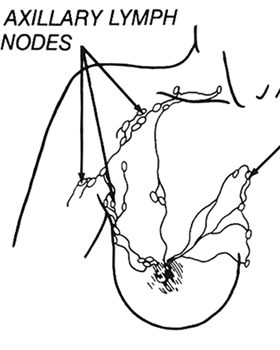 When breast cancer cells begin to escape from the primary tumor site in the breast, they often first travel to the lymph nodes under the upper arm. Therefore, it is often necessary to remove some or all of the axillary lymph nodes during breast cancer surgery (mastectomy or lumpectomy) to determine if the cancer has spread, and if so, to what extent.
Lymph node removal is usually performed on patients with invasive breast cancers during the same operation as mastectomy (breast removal) or lumpectomy (removing a breast lump), and may involve a separated incision for lumpectomy patients. There are two procedures for removing lymph nodes in breast cancer patients, axillary node dissection and sentinel node biopsy.
Illustration courtesy of NCI/NIH.
- Axillary node dissection: This is the standard way to remove axillary lymph nodes. Typically, 10 to 30 lymph nodes are removed and examined in a pathology laboratory to determine whether they contain cancer cells.
- Sentinel node biopsy: This is a relatively new approach and involves only removing the first one to three lymph nodes in the lymphatic chain. Research continues to show that checking the ‘sentinel’ lymph nodes (first nodes) allows physicians to accurately determine whether the axilla (armpit region) contains cancer and may help reduce the chances of lymphedema. If the sentinel nodes contain cancer, then additional surgery is performed to remove the remaining lymph nodes.
Some swelling (edema) in the affected breast and arm area is normal during the first six to 12 weeks after surgery. Light arm and hand exercises are usually recommended during breast cancer treatment and up to 18 months after treatment has been completed to help keep the arm mobile. Please see the sections below on Exercising After Mastectomy and Lymph Node Removal and Light Arm Exercises to Help Prevent/Manage Lymphedema for more information.
Lymphedema (chronic swelling) of the arm tends to develop gradually in 15% to 20% of breast cancer patients who have lymph nodes removed. Some research suggests that the chance of developing lymphedema after breast cancer treatment is greater if a large number of lymph nodes are removed, if radiation is used as part of treatment, if tumor cells are present in the lymph nodes when initial surgery is performed, or if wound complications develop after surgery. There is also research that indicates that exercise and skin care after surgery can help reduce the chances of lymphedema. All patients who have lymph nodes removed should be taught how to take care of the affected arm and help prevent lymphedema. Patients should also know the early signs of lymphedema and report any symptoms to their physicians immediately to help avoid long-term suffering.
|
Early Signs of Lymphedema |
|
By following certain recommendations made by the American Cancer Society, National Cancer Institute, and American Lymphedema Institute, breast cancer patients who undergo lymph node removal can help reduce their chances of developing lymphedema. Because lymphedema can occur up to years after breast cancer surgery, patients should continue to follow these guidelines and report any symptoms to their physicians at once.
The following recommendations should be instituted early after breast cancer treatment that involves lymph node removal and should be continued indefinitely. Research has shown better control if exercises to keep the lymphatic channels open are adopted early on compared to methods applied later in the course of lymphedema:
- Use the arm in normal activities (such as bathing, dressing, etc.).
- After surgery, keep the arm raised above the level of the heart for 45 minutes, two to three times a day while lying down. Position the arm on a pillow so the hand is higher than the wrist and the elbow is slightly higher than the shoulder.
- Use a soft ball or stress ball and perform squeezing exercises with the hand, even if patients are not yet ready to perform raised arm positions immediately after surgery.
- Clean the skin of the arm and hand every day and keep it moist with lotion. Lotions should not contain any alcohol, dyes, lanolin, mineral oil, petroleum products, talc or perfumes.
- Make sure all clothing in contact with the affected area is clean, and change bandages and dressing frequently.
- Avoid any needle sticks, blood tests, blood pressure testing, allergy tests or medical procedures of any kind on the affected arm whenever possible
- Be careful to avoid too much pressure on the arm. Avoid tight jewelry, clothing or elastic bandages on the affected arm.
- Do not use chemical hair removers under the arm. Use of an electric razor is recommended to avoid nicks and cuts when removing underarm hair.
- Avoid extreme changes in temperature. Do not use hot tubs or saunas.
- Take precautions to avoid any injuries to the affected arm, such as scrapes, scratches, burns, insect bites.
- Consider wearing soft pads under the arm after axillary node dissection.
- Wear a breast compression garment when traveling.
- Wear protective gloves when doing household chores, especially when chemical cleansers are involved.
- Exercise regularly but rest the affected arm immediately if it becomes tired or sore.
- Maintain a balanced diet and an ideal weight.
| Patients Should See a Physician if… |
|
Source: American Cancer Society
