


While there are many differences between the various types of diagnostic imaging tests, during most imaging exams, the basic steps in the procedure from start to finish are similar.
The first step actually begins when your doctor decides to use a diagnostic exam or test to assist in her or his diagnosis of your medical condition, injury or illness. For instance, if you have severe knee pain from a sports related injury, your doctor may refer you to have an MR scan of the knee. Or if you were experiencing severe heart burn or discomfort after eating, your doctor might refer you to have an x-ray of your upper gastro-intestinal (GI) system (esophagus and stomach). At this point, you, your doctor or your doctor's staff will help you schedule the needed diagnostic test.
Note: Some exams may require you to not eat or drink from several hours up to a day before the exam. When the appointment is made make sure you ask what preparation, if any, you need to be aware of.
The examination can be scheduled at a time and place that is convenient. Oftentimes, the imaging center is located close to your doctor's office. Always ask for the address, phone number and directions to the imaging center or department when your appointment is scheduled. Another good measure is to confirm the date and time of your appointment before you leave your doctor's office or with a follow up call before the scheduled date of the exam.
The second step occurs when you arrive at the imaging center or hospital based imaging department. You should proceed to the reception area where a receptionist will greet you and take your name and other information concerning your health plan or insurance. In some cases, the receptionist will orient you with the imaging center or department and the personnel who will be taking care of you and performing your imaging test. There will typically be a brief wait in the waiting room or reception lounge prior to beginning your imaging exam. It is always a good idea to spend this time further educating yourself about the diagnostic imaging examination you will shortly undergo.
This step can actually occur at any time, but is most useful if it takes place prior to the actual diagnostic imaging exam. You are becoming educated about the process now via these Imaginis web pages. However, immediately prior to your examination, the imaging center staff or physicians (called radiologists) may take some time to explain to you what will happen in preparation for and during the specific imaging test you will have.
Depending on the type of imaging exam you will have, your preparation prior to the imaging exam will be different. For instance, you may need to prepare for the examination up to 24 hours in advance by fasting or observing some special diet, or you may be instructed to simply eat and behave normally.
Some radiology departments and imaging centers will ask you to watch a short instructional video program prior to your examination or give you additional material to read. In general, education about your upcoming imaging exam should include facts and discussion about:
- specific type of imaging test that will be run
- what the test will determine or diagnose
- what preparation is necessary
- whether you will need to receive a pharmaceutical contrast solution (liquid)
- approximate duration of exam
- basic instructions to follow during the exam (for example, "relax and lie very still")
- the benefits and potential risks of the specific imaging exam
Some questions you may be asked before having certain diagnostic imaging tests might include:
- "are you pregnant?"
- "are you allergic to iodine or any medication?"
- "have you had any head surgery?"
- "have you ever had a heart surgery?"
- "have you ever had joint surgery or replacement?"
- "do you wear permanent eyeliner?"
- "have you ever worked with metal?"
- "do you have any metal objects implanted in your body (such as an artificial hip replacement or pacemaker)?"
Please discuss any of the above issues with your physician or imaging center staff before your diagnostic examination, especially if the answer in your case is "yes" to any of the questions.
Exam preparation (also called "patient prep") may require different steps immediately prior to the actual imaging exam, depending on what type of medical imaging test is being performed and what internal organ or suspected illness your doctor is trying to diagnose or rule out.
For instance, you may be asked to take a special pharmaceutical contrast liquid that helps highlight the structure of your organs or any potential disease or injury.
Or, patient preparation may require that you change into a comfortable, light-weight medical gown to allow imaging free from disturbance or artifacts (image degradation) caused by the fabric, zippers or buttons in your normal clothes.
Immediately prior to your study you may also be asked to remove:
- jewelry or watches
- hairpins, hair clips or wigs
- keys, coins, wallets or credit cards
- eyeglasses
- hearing aid
- removable dental work
Other steps you may be asked to complete in preparation for your imaging exam could include:
- bringing any previous x-rays, CT scans, MR scans or other medical images
- that may be pertinent to your current diagnosis and new imaging test
- wear comfortable, non-restrictive clothing (like a jogging suit)
- wear two piece clothing (top and bottom) instead of a dress or one piece
- jump suit
- bring your insurance card or medical plan information
- avoid drinking coffee or other caffeinated beverages before the exam
During almost every type of imaging exam, you need to try to follow these basic guidelines:
- relax and remain calm
- remain as still as possible, unless instructed to move
- pay attention to instructions you are given during the exam (for instance "please hold your breath")
- ask questions if you are not sure what you are being asked to do
In general, the quality of the resulting images is in part dependent on how well you follow instructions and remain calm and still. If you feel anxious or afraid, please inform the technologist or radiologist who is conducting the exam. They are there to help you, are concerned about your well being, and want to achieve the best possible images.
In many ways, an imaging exam is a lot like getting your photograph taken: if you follow the photographer's instructions, you will always get the best pictures.
One of the reasons non-invasive diagnostic imaging is used so widely in medicine is because it is largely painless and does not involve surgery. To see inside the body of a living person without using a scalpel is still an incredible feat, even some 100 years after the discovery of x-rays!
Once the diagnostic imaging exam has been performed, you will have a short wait while the technologist and radiologist determine if the images are of the appropriate clarity, sharpness and orientation. In some cases, the staff may repeat the examination or they may run a different imaging test to gather more information.
There is minimal patient recovery for most diagnostic imaging examinations. However, some exams like x-ray angiography may require a slightly longer recovery period. If you have been given a sedative as part of the procedure, you will need to have someone else drive you home.
Prior to release and departure from the imaging center or department, you may have a brief consultation with the technologist or radiologist. This person will explain to you how the imaging exam went and what the next steps may be in your medical care.
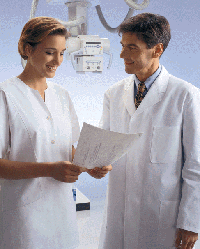
The radiologist and technologist consult about a patient case
The radiologist performs a detailed study of your images and may dictate her or his findings or diagnosis into a special voice recorder. Such a dictated report is then transcribed and made available to your physicians soon thereafter. Based on the dictated interpretation and imaging results, your physician will then determine the next steps in your diagnosis and treatment.
