


Nuclear medicine imaging (also called radionuclide scanning) shows not only the anatomy (structure) of an organ or body part, but the function of the organ as well. This functional information can show if the organ is working properly. This is due to the fact that the radionuclides (low-level radioactive chemicals used in nuclear medicine studies) are absorbed by or taken up at varying rates (or in different concentrations) by different tissue types. For instance, the thyroid gland takes up more radioactive iodine than other parts of the body. The amount of radiation that is taken up and then emitted by a specific body part is linked to the metabolic activity (cellular function) of the organ or tissue. For example, cells which are dividing rapidly (like cancer tissue cells) may be seen as "hot spots" of metabolic activity on a nuclear medicine image, since they absorb more of the radionuclide.
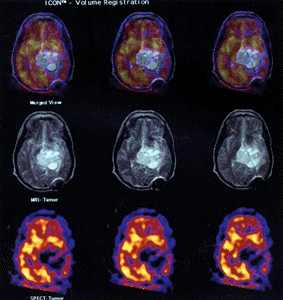
Brain tumor study and comparison of
nuclear medicine and MR
Upper row: fused image of nuclear medicine acquisition and MR acquisition
Middle row: MR study yields excellent anatomic detail (spatial resolution)
Bottom row: nuclear medicine (SPECT) images yield excellent functional information
While nuclear medicine images may show less detail (spatial resolution) than other types of imaging, the functional information they provide can be valuable (and in some cases, may not available from other types of imaging). A diseased or poorly functioning tissue will emit a different signal than healthy tissue, thus giving the physician an indication of how the tissue or organ is functioning. For example, infection of bone results in increased cellular activity of bone tissue, causing radionuclides to be taken up in greater amounts by diseased bone. Thus the functional image of the bone may show the disease sooner than the anatomic image provided by an x-ray or CT scan.
Although nuclear medicine is commonly used for diagnostic purposes, it is also used to provide valuable therapeutic applications. Among these therapeutic uses are: treatment of hyperthyroidism treatment of thyroid cancer, treatment of blood imbalances pain relief from certain types of bone cancers.
Updated: June 10, 2008
